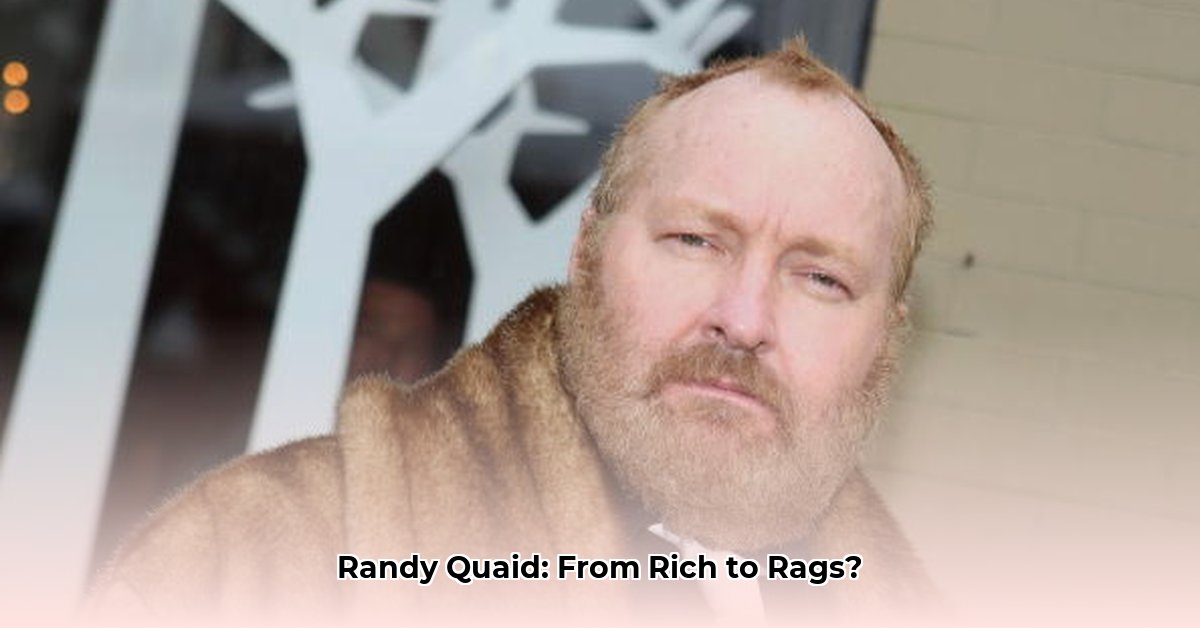
From Hollywood Heights to Financial Hardship: Randy Quaid's Dramatic Descent
Randy Quaid. The name evokes images of eccentric comedic roles and memorable performances in films like National Lampoon's Vacation and Brokeback Mountain. For a period, he reigned as a Hollywood heavyweight, amassing a considerable fortune. Yet, his story serves as a stark illustration of the fragility of success, transforming from riches to substantial financial distress. This article examines Quaid's rise and fall, analyzing the factors that contributed to his dramatic financial downturn. For comparison, see Mel Gibson's financial journey here.
The Ascent: Early Triumphs and Financial Success
Quaid's early career was marked by remarkable success. His acting talent propelled him to leading roles in major motion pictures, resulting in substantial salaries and lucrative contracts. These were the golden years, filled with red-carpet events and the promise of a secure future. He accumulated a considerable net worth, enjoying the fruits of his labor. However, this apparent financial security proved to be a precarious foundation.
The Descent: Legal Turmoil, Career Setbacks, and Reputational Damage
The decline began subtly, gradually intensifying into a downward spiral. Legal battles became increasingly frequent, starting with a highly publicized dispute surrounding Brokeback Mountain, which, though ultimately dismissed, cast a long shadow. Subsequent lawsuits, ranging from property disputes to more minor disagreements, significantly drained his finances. These legal expenses, compounded by mounting debts, began to significantly erode his wealth. Then came criminal charges and his controversial flight to Canada, seeking political asylum, a move that irrevocably damaged his Hollywood reputation. Acting opportunities dried up, leading to a dramatic reduction in income, further exacerbating his financial predicament.
A Tale of Two Brothers: Contrasting Fortunes
A striking contrast emerges when comparing Randy Quaid's path with that of his brother, Dennis Quaid. Dennis, with a reported net worth of $30 million, represents a stark juxtaposition, highlighting the critical role of careful career management and public image. While Dennis continued to thrive in Hollywood, Randy's career took a drastically different turn, leading to a substantial disparity in their financial situations.
Unraveling the Finances: Expert Opinions and Contributing Factors
Financial experts suggest a combination of factors led to Randy Quaid's financial downfall. Poor financial management, particularly in dealing with significant legal costs, is a frequently cited contributor. A lack of income diversification likely exacerbated the situation. His tarnished public image significantly diminished his ability to secure future roles, further reducing his income. This interplay created a perfect storm, eroding his assets. “Poor financial planning, combined with costly legal battles and a damaged reputation, creates a significant risk of financial ruin,” explains Dr. Anya Sharma, Professor of Finance at the University of Southern California.
Charting a Path Forward: Strategic Steps for Recovery
What steps might Randy Quaid take to improve his circumstances? While speculative, several strategies could potentially alleviate his financial difficulties. Focusing on damage control, exploring smaller roles to gradually rebuild his profile, and efficiently addressing outstanding legal issues are crucial. Seeking professional financial guidance could potentially guide him towards better financial management.
Assessing the Risks: Future Challenges
Randy Quaid faces significant ongoing challenges. The possibility of further legal battles remains tangible, posing a threat to his remaining financial resources. The damage to his reputation constitutes a significant obstacle to securing new acting roles. The combination of these risks necessitates proactive management to minimize their potential impact.
Lessons Learned: A Cautionary Tale for All
Randy Quaid's financial journey provides a powerful lesson about financial responsibility, legal awareness, and the crucial importance of cultivating and safeguarding one's public image. His experience serves as a stark warning about the precariousness of success and the potential for a swift and devastating decline. His story underscores the need for careful planning and proactive risk management, not only in the entertainment industry but also across all professions.